Drupal

Case Study

From Drupal 5 to Drupal Canvas: Keeping KSER on the Air Through Two Decades of the Web

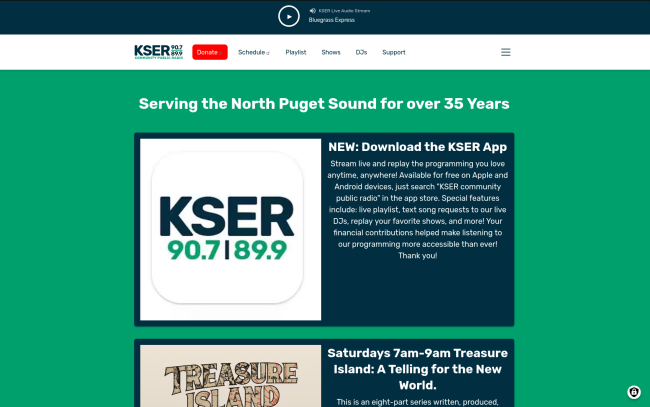
KSER is a community radio station. Community radio doesn't get downtime, and it doesn't get a big IT budget either. When Freelock took over the site in 2013, it was already running on Drupal 5 -- a version that was already end-of-life by then, having been in service well past its own supported lifespan before we ever touched it. We tried to upsell KSER on a rebuild early in the relationship. The answer was simple: there was no budget for it.
Website management, Drupal, WordPress, security, automation, configuration management.
🕑May 28, 2026 🖋John Locke 💬0

Every Night, Argo Watches

While your site is running, things change. A content editor tweaks a configuration setting. A security vulnerability surfaces in a dependency. A production fix gets applied directly instead of going through the normal release process.


Bloody crime scene, gumshoe detective, magnifying glass, dusty office
🕑May 22, 2026 🖋John Locke 💬0

The Night the Internet Tried to Kill Your Website

May 2026
My name doesn't matter. Call me the op. I run a small shop — we keep websites alive, patch the holes before the wrong people find them, and make sure that when something goes sideways, there's always a way back. It's not glamorous work. But this spring? This spring was something else.
AI vulnerabilities, security incidents, resilience, Drupal WordPress, cybersecurity
🕑May 18, 2026 🖋John Locke 💬0

The Rules Have Changed: Security in the Age of AI-Assisted Attacks

Security is getting dramatically harder and more expensive. AI is simultaneously driving an explosion in vulnerability discovery and weaponizing the exploits that follow. The question for every organization with anything online is no longer whether to invest in resilience — it's whether that investment is already in place before the next incident arrives.
Hands typing on a glowing keyboard with diverse icons.

Dragging Movements

On October 5, 2023, the W3C published WCAG 2.2 as an official web standard. While WCAG 2.1 remains valid and widely referenced, WCAG 2.2 introduces nine new success criteria and removes one obsolete requirement. These changes reflect a deeper understanding of mobile accessibility, cognitive disabilities, and focus management.

The Legal Landscape

Adoption of WCAG 2.2 varies by jurisdiction:

Laptop with floating screen above a keyboard on a transparent background.

Predictable Behavior

You're tabbing through a form, reading field labels before you decide what to enter. You tab into a dropdown menu just to see what options are available. The instant it receives focus - before you've even opened it - the page suddenly redirects to a completely different page. You didn't select anything, didn't press Enter, just tabbed through. Now you're disoriented and have to navigate back to find your place.

Microphone icon with circular background

Label in Name

You're using voice control to navigate a website because typing is painful today. You see a button that says "Submit" - perfect, that's what you need. You say clearly: "Click Submit." Nothing happens. You try again: "Click Submit button." Still nothing. Frustrated, you finally say "Show numbers" to overlay numbers on every interactive element, then speak the number to activate the button.

Colorful app icon with various analytics symbols, including graphs and magnifying glass.

Text Flexibility

You're reading a website, but the text feels cramped. Lines are too close together, making it hard to track from one line to the next. Words blur together. You try increasing your browser's font size, but that only makes part of the problem worse - now the text is bigger but still squished together.

If you could just add a little more space between lines, between words, between letters... you'd be able to read comfortably. But when you try using a browser extension to adjust spacing, the layout breaks. Text gets cut off. Paragraphs overlap. Buttons disappear.

Futuristic keyboard with music and skip buttons, blue accents, pencil nearby.

Bypass Blocks

Imagine navigating a website with only your keyboard. You hit Tab to move through interactive elements. First tab: logo link. Second tab: search box. Third tab: first navigation link. Fourth, fifth, sixth tabs: more navigation links. Seventh tab: social media icons. Eighth tab: language selector. Finally, after nine or ten tab presses, you reach the actual content of the page.

Now imagine doing this on every single page you visit. Every. Single. Time.